
There’s a version of your home that wakes up when you do, adjusts the temperature before you ask, locks the front door automatically when you leave, and turns the lights off in every room you forgot about. That version of your home isn’t a concept anymore — it’s what the best smart home devices available right now actually make possible. And unlike a few years ago, getting there doesn’t require an IT degree, a massive budget, or a house full of wiring you didn’t want to think about.
The best smart home devices have quietly crossed a threshold in 2026. They work together better than ever thanks to the Matter protocol, they’re smarter thanks to AI, and they’re more affordable thanks to genuine market competition. Whether you’re starting from scratch or upgrading an existing setup, this guide covers everything you need to know — what to buy, why it matters, and how to build a connected home that actually fits your life.
Why the Best Smart Home Devices Are Worth It in 2026
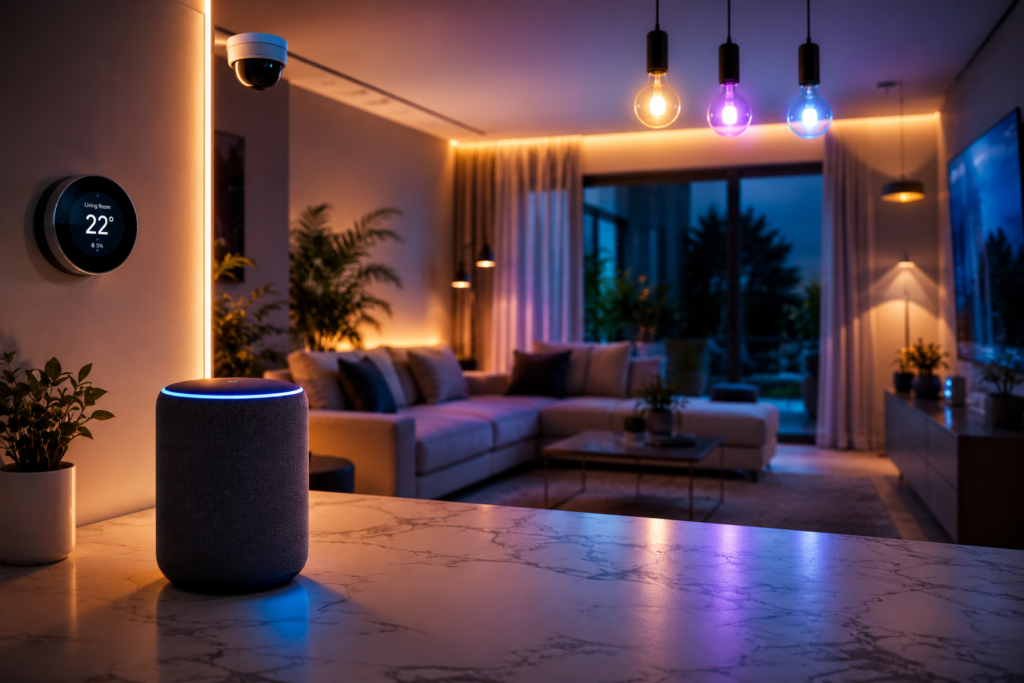
A lot of people hesitate because they’ve been burned before — smart plugs that disconnected every week, voice assistants that misunderstood half their commands, or ecosystems that locked them into one brand forever. That experience was real, and it was frustrating. But the landscape has shifted enough that those concerns carry a lot less weight today.
The single biggest change has been the widespread adoption of Matter, an open connectivity standard backed by Apple, Google, Amazon, and Samsung. What this means in practice is that the best smart home devices you buy today can talk to each other regardless of brand, without needing separate hubs or complicated workarounds. You’re no longer choosing between ecosystems — you’re just choosing devices.
AI integration is the other major shift. The best smart home devices aren’t just responding to commands anymore — they’re learning patterns, anticipating needs, and making decisions without being asked. A smart thermostat that notices you always turn the heat down on Friday evenings and starts doing it automatically is qualitatively different from one that just lets you set a schedule. That’s the direction the whole category has been moving, and in 2026, it’s arrived.
Best Smart Home Devices for Every Room: A Complete Breakdown
The best smart home devices aren’t one-size-fits-all, and the best setup for your home depends on how you actually live in it. Here’s a room-by-room breakdown of what’s worth buying, what’s worth skipping, and what the standout options look like at different price points.
Smart Speakers and Displays — The Brain of Your Setup
Before you buy anything else, you need something to control it all. Smart speakers and displays are the command center of any connected home, and picking the right one shapes everything that comes after.
Amazon Echo Show 21
The Echo Show 21 is currently one of the best smart home devices for households that want a proper hub rather than a basic speaker. The 21-inch full-HD screen makes it genuinely useful as a family dashboard — you can manage calendars, watch content, make video calls, and monitor your security cameras all from one place. Alexa’s smart home integration is still the most extensive in the market, which matters when you’re connecting multiple devices.
Best for: Families, Alexa ecosystem users, anyone who wants a visual hub Price range: $$$
💡 [PRODUCT PLACEMENT BLOCK]
This section is reserved for a sponsored or affiliate placement for a smart speaker or display product. Ideal placement for: Amazon Echo, Google Nest Hub, or Apple HomePod partner deals.
Google Nest Hub Max
If your life runs on Google — Calendar, Photos, Gmail — the Nest Hub Max is one of the best smart home devices for keeping everything in one place. The 10-inch display handles smart home control beautifully, and Google’s natural language understanding is arguably the most conversational of the major assistants. It also has a built-in camera for video calls and a smart home camera view, which adds real utility beyond just controlling devices.
Best for: Google ecosystem users, smaller spaces, natural voice interaction Price range: $$
Apple HomePod (2nd Gen)
For iPhone and Apple ecosystem households, the HomePod is simply the best smart home device that fits without friction. Siri has improved considerably, HomeKit integration is seamless, and the audio quality — while not the primary reason to buy it — is genuinely impressive. If privacy is a concern, Apple’s approach to data handling is the most restrictive of the major platforms, which is a genuine differentiator.
Best for: Apple households, audio quality, privacy-conscious users Price range: $$$
Smart Thermostats — Where You Actually Save Money
Of all the best smart home devices you can buy, a smart thermostat has the clearest return on investment. Energy savings of 10–23% are common, and that adds up fast over a year of heating and cooling bills.
Ecobee Smart Thermostat Premium
The Ecobee is consistently ranked among the best smart home devices in the thermostat category — and for good reason. It ships with a remote sensor that monitors temperature and occupancy in different rooms, solving the problem every traditional thermostat has: it only knows what’s happening where it’s installed. The Ecobee Premium also has a built-in air quality monitor, a smart speaker, and compatibility with every major platform including Matter.
Best for: Multi-room homes, energy efficiency, users who want one device to do several jobs Price range: $$$
💡 [PRODUCT PLACEMENT BLOCK]
Reserved for a sponsored or affiliate placement for a smart thermostat product. Ideal for: Ecobee, Google Nest Thermostat, or Honeywell Home partner deals.
Google Nest Thermostat
The Nest Learning Thermostat is the device that made the entire category feel worth caring about, and it still holds up as one of the best smart home devices for most households. It learns your schedule in about a week and programs itself accordingly. The interface is elegant, setup is simple, and it works well with both Google Home and Amazon Alexa.
Best for: Google ecosystem users, rental-friendly installations, first-time smart thermostat buyers Price range: $$
Smart Lighting — The Easiest Place to Start
If you’re brand new to smart home tech, lighting is the best entry point. It’s low-risk, immediately satisfying, and it gives you a feel for how the best smart home devices integrate before you commit to anything bigger.
Philips Hue Starter Kit
Philips Hue remains the benchmark for smart lighting. The bulbs are reliable, the app is excellent, and the ecosystem is enormous — there are hundreds of compatible accessories, third-party integrations, and pre-built scenes designed by lighting professionals. With a Hue Bridge, you also get local control, which means your lights still work if your internet goes down. That reliability is why Philips Hue consistently appears in any honest list of the best smart home devices across categories.
Best for: Anyone who wants lighting that just works, long-term, without headaches Price range: – $
💡 [PRODUCT PLACEMENT BLOCK]
Reserved for a sponsored or affiliate placement for smart lighting. Ideal for: Philips Hue, LIFX, Govee, or Nanoleaf partner deals.
LIFX Color Bulbs
LIFX is the no-hub alternative to Philips Hue. Each bulb connects directly to Wi-Fi, which simplifies setup considerably. The color accuracy is excellent, the brightness is high, and the app is intuitive. If you want the best smart home devices for lighting without the upfront cost of a hub, LIFX is the answer.
Best for: Renters, minimalists, people who hate extra hardware Price range: $$
Smart Security — Peace of Mind That Actually Delivers
Security is where a lot of people first get serious about smart home devices, and it’s an area where the best smart home devices have made genuinely impressive strides.
Ring Video Doorbell Pro 2
The Ring Video Doorbell Pro 2 consistently ranks among the best smart home devices in the security category. It delivers 1536p HD video with a head-to-toe view that captures packages and visitors without cutting off feet or faces — which sounds trivial until you’ve watched a dozen doorbell camera clips with exactly that problem. 3D motion detection lets you draw precise zones, drastically cutting down on false alerts. It requires hardwiring, but the trade-off is no battery management.
Best for: Homeowners, Alexa users, anyone who gets a lot of deliveries Price range: $$
💡 [PRODUCT PLACEMENT BLOCK]
Reserved for a sponsored or affiliate placement for a smart doorbell or security camera. Ideal for: Ring, Arlo, Eufy, or Nest Cam partner deals.
Arlo Pro 5S
For outdoor security cameras, the Arlo Pro 5S is one of the best smart home devices in this space. 4K video, colour night vision, and a 160-degree field of view cover serious ground without needing multiple cameras. It’s fully wireless, works with all major platforms, and Arlo’s AI-powered person/vehicle/animal detection is accurate enough to have made most of the false alerts a non-issue.
Best for: Outdoor monitoring, wireless setups, multi-camera coverage Price range: $$$
Smart Locks — One Less Key to Worry About
Schlage Encode Plus
The Schlage Encode Plus is, by most measurements, one of the best smart home devices in the lock category. It has built-in Wi-Fi, which means no bridge or hub is required. It supports Apple Home Key — tap your iPhone or Apple Watch to unlock — as well as a physical keypad and traditional key backup. The build quality feels genuinely premium, which matters for something you rely on for home security.
Best for: Apple users, households with multiple access codes needed, security-conscious buyers Price range: $$$
Yale Assure Lock 2
The Yale Assure Lock 2 is the most versatile of the best smart home devices in the smart lock space. It’s available in configurations for Alexa, Google, HomeKit, and Matter, making it one of the few locks that works comfortably in any ecosystem. The touchscreen keypad is clean and intuitive, setup takes under 20 minutes, and the app handles access code management without any friction.
Best for: Mixed ecosystem households, renters (with the right door), multi-platform flexibility Price range: $$
Smart Robot Vacuums — Set It and Actually Forget It
Roborock S8 MaxV Ultra
This is one of the best smart home devices for people who want to fully automate cleaning. It mops, vacuums, self-empties, self-washes its mop head, and refills its own water tank — all without you touching it. The obstacle avoidance is the best in its class, which means it actually navigates a real home rather than a showroom. If you’ve been disappointed by robot vacuums before, this one is likely the reason people keep recommending them.
Best for: Pet owners, busy households, people who hate vacuuming Price range: $$$$
💡 [PRODUCT PLACEMENT BLOCK]
Reserved for a sponsored or affiliate placement for a robot vacuum. Ideal for: Roborock, iRobot Roomba, Ecovacs, or Shark partner deals.
How to Build Your Smart Home Without Wasting Money
Knowing which of the best smart home devices to buy is only half the equation. Buying in the wrong order is one of the most common mistakes people make, and it leads to redundant purchases, compatibility headaches, and setups that don’t actually do what you wanted.
Start with a hub, then build around it. Pick your ecosystem — Alexa, Google Home, or Apple HomeKit — and commit to it as your primary controller. You can always add Matter-compatible devices from other brands later, but having a clear home base makes everything simpler.
Prioritise the highest-impact rooms first. The best smart home devices to start with are the ones you interact with most. For most people that’s the living room (speaker/display), bedroom (lighting, thermostat), and front door (lock, doorbell camera). Get those right before moving into less-used spaces.
Don’t buy cheap no-name devices to save money. The best smart home devices market is full of cut-price alternatives with inconsistent apps, poor integration support, and zero long-term update commitments. Spending a bit more on established brands is almost always worth it when you’re building a setup you’ll rely on daily.
Check Matter compatibility before you buy. This single check will save you a lot of headaches. Matter-compatible devices are your best insurance against ecosystem lock-in and compatibility problems as your setup grows.
Best Smart Home Devices and AI: What’s Changing
The same AI wave reshaping tools like image generation — if you’ve been following developments in that space, check out our breakdown of the best AI image generators 2026 for a sense of how fast these models are improving — is doing the same thing to home automation. AI isn’t just a marketing word anymore. It’s the reason your thermostat learns your schedule, your security camera tells the difference between a person and a dog, and your vacuum figures out which rooms to prioritise on cleaning day.
The best smart home devices launching in the second half of 2026 are leaning even harder into this. Predictive automation — where devices act before you ask based on historical patterns — is becoming a standard expectation rather than a premium feature. Energy optimisation that adapts to real-time electricity pricing is already in several thermostats. And local AI processing (running on the device itself rather than in the cloud) is improving privacy while reducing response lag.
The short version: the best smart home devices of today are meaningfully smarter than those of two years ago, and the trajectory is continuing upward.
Quick Comparison: Best Smart Home Devices by Category
| Category | Top Pick | Runner-Up | Best Budget Option |
|---|---|---|---|
| Smart Speaker | Amazon Echo Show 21 | Google Nest Hub Max | Amazon Echo Pop |
| Thermostat | Ecobee Premium | Google Nest Thermostat | Amazon Smart Thermostat |
| Lighting | Philips Hue | LIFX Color | Wyze Bulbs |
| Doorbell Camera | Ring Video Doorbell Pro 2 | Arlo Essential Doorbell | Eufy Video Doorbell E20 |
| Outdoor Camera | Arlo Pro 5S | Google Nest Cam | Wyze Cam Outdoor |
| Smart Lock | Schlage Encode Plus | Yale Assure Lock 2 | Wyze Lock |
| Robot Vacuum | Roborock S8 MaxV Ultra | iRobot Roomba j9+ | Roborock Q5 Pro |
Conclusion
The best smart home devices available right now represent something genuinely worth getting excited about. The compatibility problems of previous years have largely been solved by Matter. The frustrating setup experiences have been smoothed by better apps and clearer instructions. And the usefulness gap between “interesting gadget” and “something I actually rely on every day” has finally closed for most of the major categories.
Whether you’re starting with a single smart bulb or planning a full-house setup, the best smart home devices give you a clear path to a home that works harder, costs less to run, and feels meaningfully easier to live in. Start with one room, pick the right hub for your ecosystem, and build from there. The tools are ready — and they’re better than they’ve ever been.